

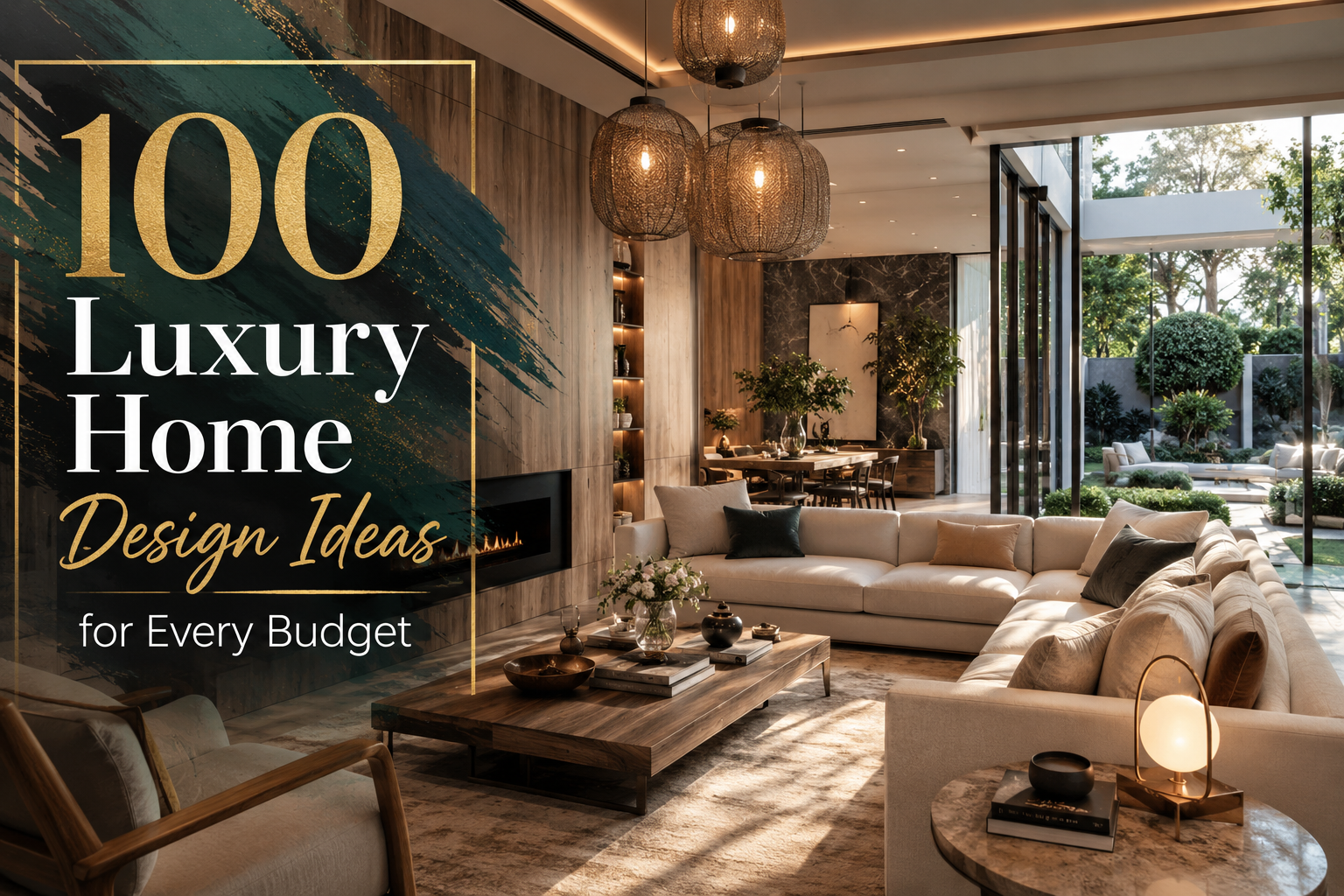
Luxury does not always require a large budget. The right materials, thoughtful layout, layered lighting, and carefully chosen details can make any home feel more elegant and comfortable. These 100 luxury home design ideas offer practical inspiration for apartments, family homes, and larger properties at every price point.
How to Create a Luxury Look on Any Budget
The most successful luxury interiors combine beauty with function. Start with the improvements that make the biggest visual difference, then add personal details that make the space feel finished.
- Choose a calm, coordinated color palette.
- Prioritize quality in high-use areas.
- Layer lighting instead of relying on one ceiling fixture.
- Keep surfaces organized and remove unnecessary clutter.
- Mix affordable pieces with a few distinctive investment items.
100 Luxury Home Design Ideas
Affordable Styling and Finishing Touches
- Layer neutral colors: Combine cream, taupe, warm white, and soft gray for an understated, high-end foundation.
- Upgrade cabinet hardware: Replace basic handles with brushed brass, matte black, or polished nickel pulls.
- Install statement mirrors: A large decorative mirror reflects light and makes a room appear more spacious.
- Use oversized artwork: One large piece often looks more luxurious than several small, unrelated prints.
- Add full-length curtains: Mount curtain rods close to the ceiling to create a taller, more elegant appearance.
- Style coffee tables: Arrange books, a tray, and one sculptural object for a polished but relaxed display.
- Choose matching hangers: Uniform hangers instantly make closets look cleaner and more intentional.
- Replace dated lampshades: Linen or pleated shades provide a softer, more sophisticated glow.
- Display fresh greenery: A large plant or simple branches add texture and natural color.
- Hide visible cables: Use cable covers or cord boxes to create a cleaner, more finished look.
- Anchor the seating area: Use a generously sized rug that allows at least the front legs of furniture to rest on it.
- Mix upholstery textures: Pair velvet, linen, leather, and woven fabrics for depth and visual interest.
- Add a tailored sofa: Choose clean lines, supportive cushions, and a durable fabric in a timeless color.
- Create a reading corner: Place a comfortable chair, floor lamp, and small side table beside a window.
- Install wall molding: Simple picture-frame molding adds architectural character at a modest cost.
- Use sculptural lighting: A distinctive pendant or floor lamp can become the room’s focal point.
- Build a balanced layout: Arrange furniture to encourage conversation rather than pointing everything at the television.
- Add a fireplace feature: A painted mantel, electric insert, or tiled surround creates an inviting centerpiece.
- Choose layered cushions: Combine different sizes and subtle patterns without overcrowding the sofa.
- Introduce a console table: Style it with art, books, and a lamp to make an empty wall feel purposeful.
- Use a two-tone palette: Pair light upper cabinets with darker lower units for a custom-designed appearance.
- Install a tiled backsplash: Handmade-look tile, marble-effect porcelain, or slim subway tile adds character.
- Upgrade the faucet: A refined gooseneck or bridge faucet can transform the entire sink area.
- Add under-cabinet lighting: LED strips improve task lighting and create a warm evening atmosphere.
- Choose stone-look surfaces: Quartz or porcelain offers a durable, luxurious appearance with easier maintenance.
- Design a beverage station: Create a dedicated area for coffee, tea, wine, or entertaining essentials.
- Use open shelving selectively: Display attractive ceramics while keeping most storage behind closed doors.
- Install a deep farmhouse sink: A substantial sink combines practical capacity with a distinctive design statement.
- Add decorative pendants: Hang two or three coordinated lights above an island or peninsula.
- Organize interior storage: Pull-out drawers, dividers, and corner systems make the kitchen feel custom.
- Create a layered bed: Use crisp sheets, a duvet, a coverlet, and decorative pillows for a hotel-inspired finish.
- Choose a statement headboard: Upholstered, fluted, or wood-paneled headboards add immediate sophistication.
- Install bedside sconces: Wall-mounted lights save space and create symmetrical, practical illumination.
- Use blackout window treatments: Quality curtains or shades improve sleep while giving the room a tailored look.
- Add a bench at the bed: A slim upholstered bench provides function and balances the room visually.
- Paint the ceiling: A soft contrasting ceiling color creates depth without overwhelming the space.
- Choose a calm palette: Muted greens, warm neutrals, dusty blues, and natural woods promote relaxation.
- Upgrade the bedding: Select breathable natural fabrics with a generous, well-finished duvet.
- Create a dressing area: Add a mirror, compact stool, and focused lighting near the wardrobe.
- Use hidden storage: Choose beds with drawers or built-in wardrobes to keep the room serene.
- Use large-format tile: Fewer grout lines create a clean, expansive, and contemporary appearance.
- Add a rainfall shower: Pair a ceiling or wall-mounted rainfall head with a handheld sprayer.
- Install a floating vanity: Wall-mounted cabinetry makes the bathroom feel larger and easier to clean.
- Choose heated flooring: Electric radiant heat adds comfort during colder mornings.
- Upgrade the towel display: Use a ladder, hotel-style bars, or built-in shelving for a refined presentation.
- Include a freestanding tub: Where space allows, a sculptural tub creates a dramatic focal point.
- Use coordinated fixtures: Matching faucets, shower hardware, and accessories produce a cohesive result.
- Add dimmable lighting: Adjustable light levels support both grooming and relaxing baths.
- Install a framed shower screen: A slim black or metallic frame adds architectural definition.
- Bring in natural materials: Wood accents, stone trays, and woven baskets soften hard bathroom surfaces.
- Hang a central chandelier: Position it carefully above the table for an elegant and balanced composition.
- Choose a statement dining table: Solid wood, stone, or sculptural bases make everyday meals feel special.
- Mix dining chairs: Combine end chairs with upholstered side chairs for a tailored designer look.
- Add a serving console: Use a sideboard to store tableware and support effortless entertaining.
- Display curated tableware: Open cabinets or glass doors can showcase attractive plates and glassware.
- Use a dining room rug: Select a durable rug large enough to keep chairs on the surface when pulled out.
- Create a bar nook: A compact cabinet with glassware and a tray adds a sophisticated hosting feature.
- Install dimmer switches: Softer lighting helps transition the room from family meals to formal dinners.
- Add wall texture: Grasscloth wallpaper, limewash, or paneling gives the dining room more depth.
- Use fresh seasonal decor: Simple flowers, branches, or candles create an inviting centerpiece.
- Choose a substantial desk: A wood, stone, or quality veneer desk establishes a confident workspace.
- Use built-in shelving: Floor-to-ceiling storage adds architectural value and keeps supplies organized.
- Add a leather chair: A supportive executive chair can combine comfort with a classic luxury feel.
- Create a video-call backdrop: Position art, books, or shelving behind the desk for a professional setting.
- Layer task lighting: Combine a desk lamp, ambient fixture, and natural daylight for eye comfort.
- Hide office equipment: Use cabinets or attractive boxes to conceal printers, chargers, and paperwork.
- Install acoustic panels: Decorative fabric panels improve sound quality and reduce distractions.
- Add a library ladder: In a tall bookcase, a rolling ladder creates a distinctive architectural detail.
- Use a refined color scheme: Deep blue, olive, charcoal, or warm brown can make an office feel established.
- Include a lounge chair: A separate reading seat makes the office more comfortable and versatile.
- Install a console: A slim table creates a useful landing zone for keys and decorative objects.
- Use a durable runner: A patterned hallway runner protects floors while adding color and direction.
- Add a round mirror: A mirror above the console provides a welcoming focal point and reflects light.
- Create hidden shoe storage: Closed cabinetry keeps the entryway calm and uncluttered.
- Upgrade the front door: New hardware, paint, or a high-quality knocker improves first impressions.
- Install wall hooks: Select coordinated hooks for coats, bags, and everyday accessories.
- Use statement wallpaper: A small entry can handle bold pattern without making the entire home feel busy.
- Add a seat: A compact bench makes putting on shoes easier and creates a finished look.
- Improve hallway lighting: Repeated sconces or small ceiling fixtures make long corridors feel intentional.
- Display one artwork collection: A carefully aligned gallery wall adds personality and visual rhythm.
- Create an outdoor living room: Arrange weather-resistant seating around a coffee table and outdoor rug.
- Add layered landscape lighting: Illuminate paths, trees, steps, and architectural features for evening appeal.
- Upgrade the patio surface: Large pavers, composite decking, or patterned tile can elevate outdoor spaces.
- Install a pergola: A pergola defines an outdoor zone and provides structure for shade or climbing plants.
- Use oversized planters: Large, matching containers create a more intentional and luxurious landscape.
- Add a water feature: A compact fountain or reflecting bowl introduces movement and calming sound.
- Design an outdoor kitchen: Include a grill, counter space, storage, and a small beverage refrigerator.
- Choose quality outdoor fabrics: Performance cushions resist fading while maintaining a refined appearance.
- Refresh the entry landscaping: Symmetrical plants, fresh mulch, and a clear path improve curb appeal.
- Add a fire feature: A fire pit or linear fireplace extends outdoor entertaining into cooler evenings.
Living Room Luxury Ideas
Elegant Kitchen Upgrades
Luxury Bedroom Design Ideas
Spa-Inspired Bathroom Ideas
Dining Room and Entertaining Ideas
Home Office and Library Ideas
Entryway and Hallway Ideas
Outdoor and Curb Appeal Ideas
Where to Invest First
When your budget is limited, focus on upgrades that improve daily comfort, visual impact, or long-term durability. This simple guide can help prioritize spending.
| Budget level | Best starting points | Expected benefit |
|---|---|---|
| Affordable | Paint, lighting, hardware, textiles, mirrors, and decluttering | Fast visual improvement with limited construction |
| Mid-range | Flooring, cabinetry updates, tile, landscaping, and custom storage | Better function, durability, and design consistency |
| Premium | Custom millwork, natural stone, smart-home systems, and outdoor rooms | Personalized comfort, quality, and long-term value |
How to Plan Your Luxury Home Design
A practical three-step process
- Define the feeling: Decide whether you want the home to feel serene, dramatic, modern, traditional, or warmly collected.
- Set priorities: List the rooms and upgrades that will improve your daily routine most.
- Build in layers: Begin with layout and finishes, then add lighting, furniture, artwork, and accessories.
Before purchasing, create a simple palette of colors, metals, woods, and fabrics. Repeating these elements throughout the home makes even a modest renovation feel professionally designed.
Conclusion
These luxury home design ideas show that elegance comes from thoughtful decisions rather than spending alone. Whether you refresh a room with new lighting and textiles or invest in custom cabinetry and outdoor living features, a clear plan can create a home that feels polished, comfortable, and uniquely yours.
Frequently Asked Questions
What is the most affordable way to make a home look luxurious?
Start with decluttering, a coordinated paint palette, improved lighting, full-length curtains, quality textiles, and updated hardware. These changes create a noticeable transformation without major construction.
Which luxury home upgrades add the most value?
Well-planned kitchens, bathrooms, durable flooring, effective storage, energy-efficient improvements, and attractive outdoor spaces often provide strong practical and visual value.
How can I make a small home feel more luxurious?
Use consistent colors, appropriately scaled furniture, reflective surfaces, concealed storage, layered lighting, and multifunctional pieces to make the space feel larger and more intentional.
How do I avoid making luxury design feel cold?
Balance clean lines with warm woods, soft fabrics, natural greenery, personal artwork, and comfortable seating. Luxury should feel inviting as well as beautiful.
Ready to Elevate Your Home?
Choose three ideas from this list, set a realistic budget, and begin with the improvement that will make the biggest difference to your everyday life. For more practical inspiration and expert guidance, explore AI Content Studio and plan your next design project with confidence.