
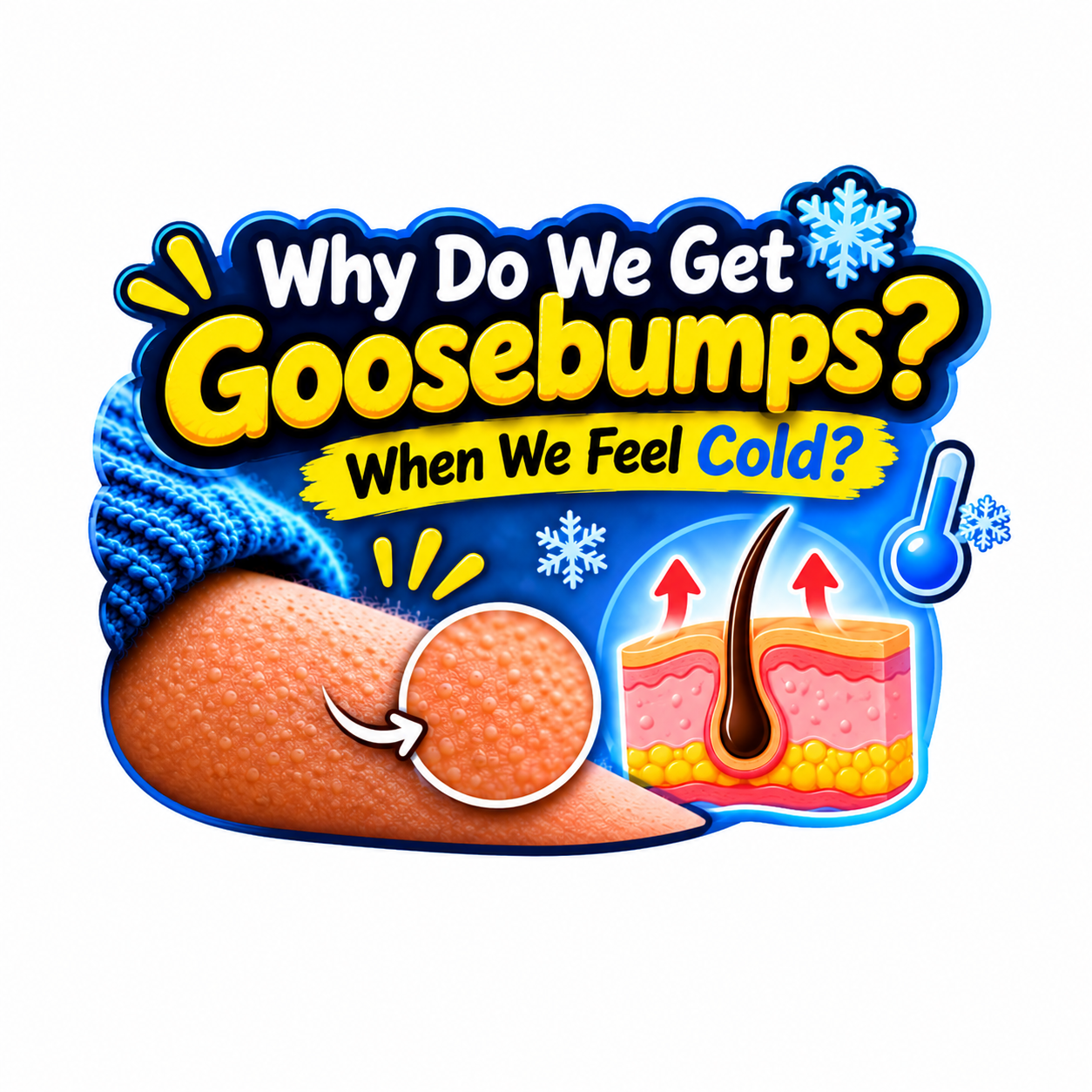
Have you ever stepped out into cold weather and suddenly noticed tiny bumps appearing all over your skin? Your body hair starts standing upright, and your skin develops a rough, bumpy texture. We commonly call this reaction Goosebumps. But have you ever wondered what actually happens inside your body to make this happen?
It’s not just a random reaction. It’s a fascinating biological process controlled by your nervous system!
What Happens Inside Our Body?
Whenever our body senses cold temperatures, it automatically activates a protective response. Here’s how it works:
- Nervous System Gets Activated: When our body feels cold, the nervous system sends signals to tiny muscles attached to our hair follicles.
- Tiny Muscles Start Contracting: These muscles are known as Arrector Pili Muscles. They are responsible for pulling our hair follicles upwards.
- Hair Starts Standing: As these muscles contract, the tiny hairs on our skin begin to stand upright.
- Goosebumps Appear: The surrounding skin rises slightly, creating small bumps on the surface. This is what we commonly call goosebumps.
But Why Does Our Body Do This?
Interestingly, goosebumps have an evolutionary connection.
Our ancestors had much more body hair than modern humans. When their hair stood upright, it helped trap a layer of air close to the skin, providing additional insulation against cold temperatures.
Today, humans have comparatively less body hair, so this mechanism does not help us retain much warmth. However, our bodies have continued to preserve this natural response through evolution.
Did You Know?
Goosebumps can also appear when we experience:
- Fear or sudden excitement.
- Emotional music or powerful memories.
- Strong feelings or unexpected situations.
The Interesting Part: Goosebumps are more than just tiny bumps on your skin. They are a reminder of how our nervous system, muscles and evolutionary history work together through automatic reactions that we don’t even have to think about!