
Have you ever been enjoying your favourite meal when suddenly an unexpected hic! interrupts you? Hiccups are common and usually harmless, but have you ever wondered what actually causes them?
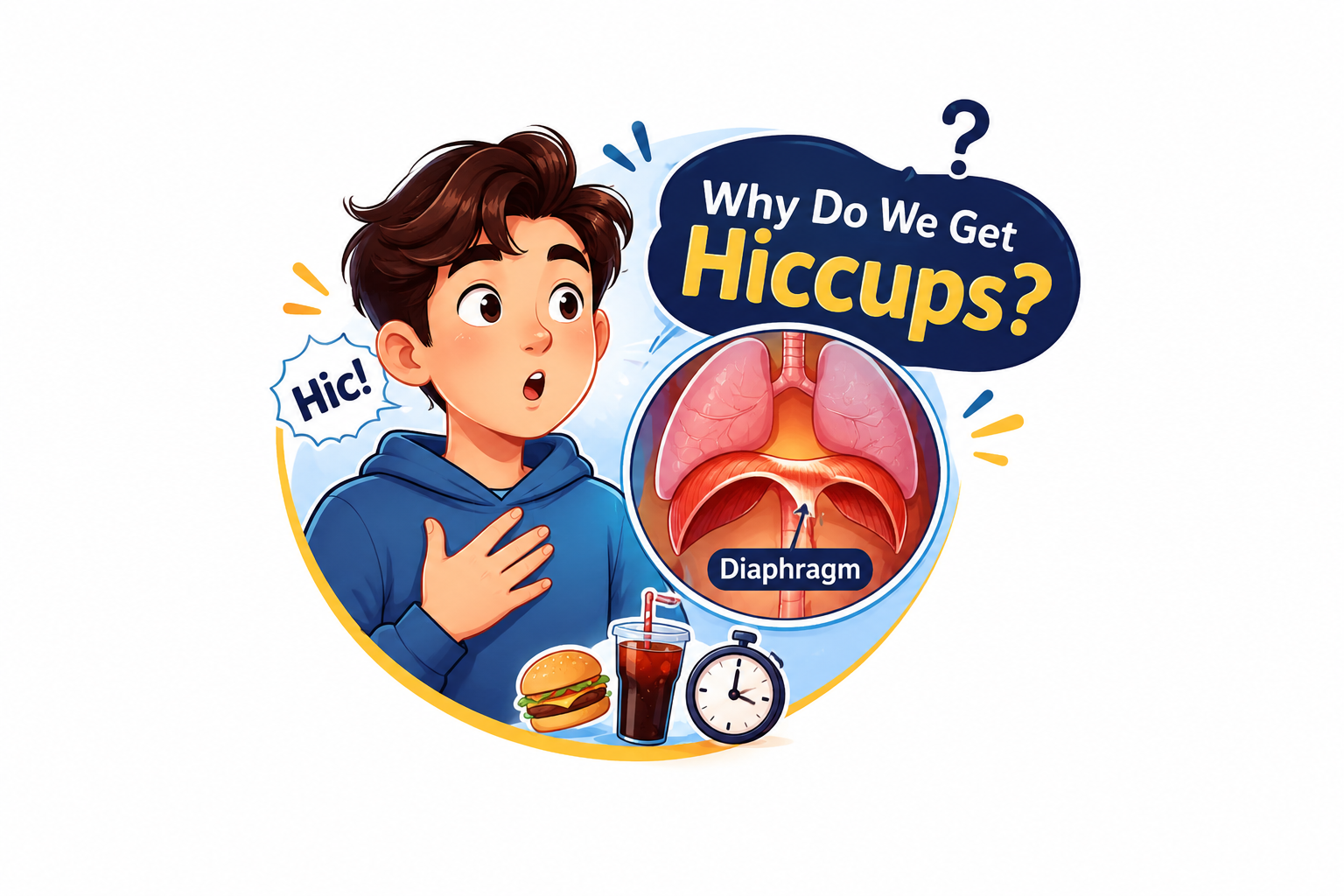
The answer lies in a small but important muscle in your body called the diaphragm.
What Happens Inside Your Body When You Get Hiccups?
The diaphragm is a muscle located between your chest and abdomen. It plays an essential role in breathing by contracting and relaxing as you inhale and exhale.
Sometimes, the diaphragm suddenly contracts involuntarily. Immediately after this, your vocal cords close quickly, producing the familiar sound we know as a hiccup.
What Are the Common Causes of Hiccups?
Although hiccups can happen unexpectedly, certain everyday habits can trigger them, including:
- Eating Too Quickly: Swallowing air while eating can irritate the diaphragm.
- Overeating: Consuming too much food can cause the stomach to expand and put pressure on the diaphragm.
- Carbonated Drinks: Fizzy beverages can increase gas in the stomach and trigger hiccups.
- Sudden Temperature Changes: Quickly switching between hot and cold foods or drinks may sometimes trigger hiccups.
Do Hiccups Go Away on Their Own?
In most cases, hiccups disappear naturally within a few minutes without requiring any treatment. Drinking water slowly, eating at a relaxed pace, and avoiding overeating may help reduce common triggers.
However, if hiccups continue for more than 48 hours, it is advisable to consult a healthcare professional.
A Small Muscle, A Surprising Reaction!
Hiccups may seem like a random body reaction, but they are actually the result of a fascinating process involving your diaphragm and vocal cords.
A simple takeaway: Eat slowly, avoid overeating, and be mindful of your eating habits. Sometimes, small lifestyle changes can make a difference!
Stay curious, stay informed, and keep learning about the amazing ways your body works.