
Bad breath, also known as halitosis, is a common problem that can affect anyone. It can happen due to poor oral hygiene, bacteria buildup on the tongue, dry mouth, or food particles stuck between the teeth. The good news is that a few simple home remedies and daily habits can help keep your mouth clean and fresh.
Let’s explore some easy ways to reduce bad breath naturally.

1. Rinse Your Mouth with Warm Salt Water
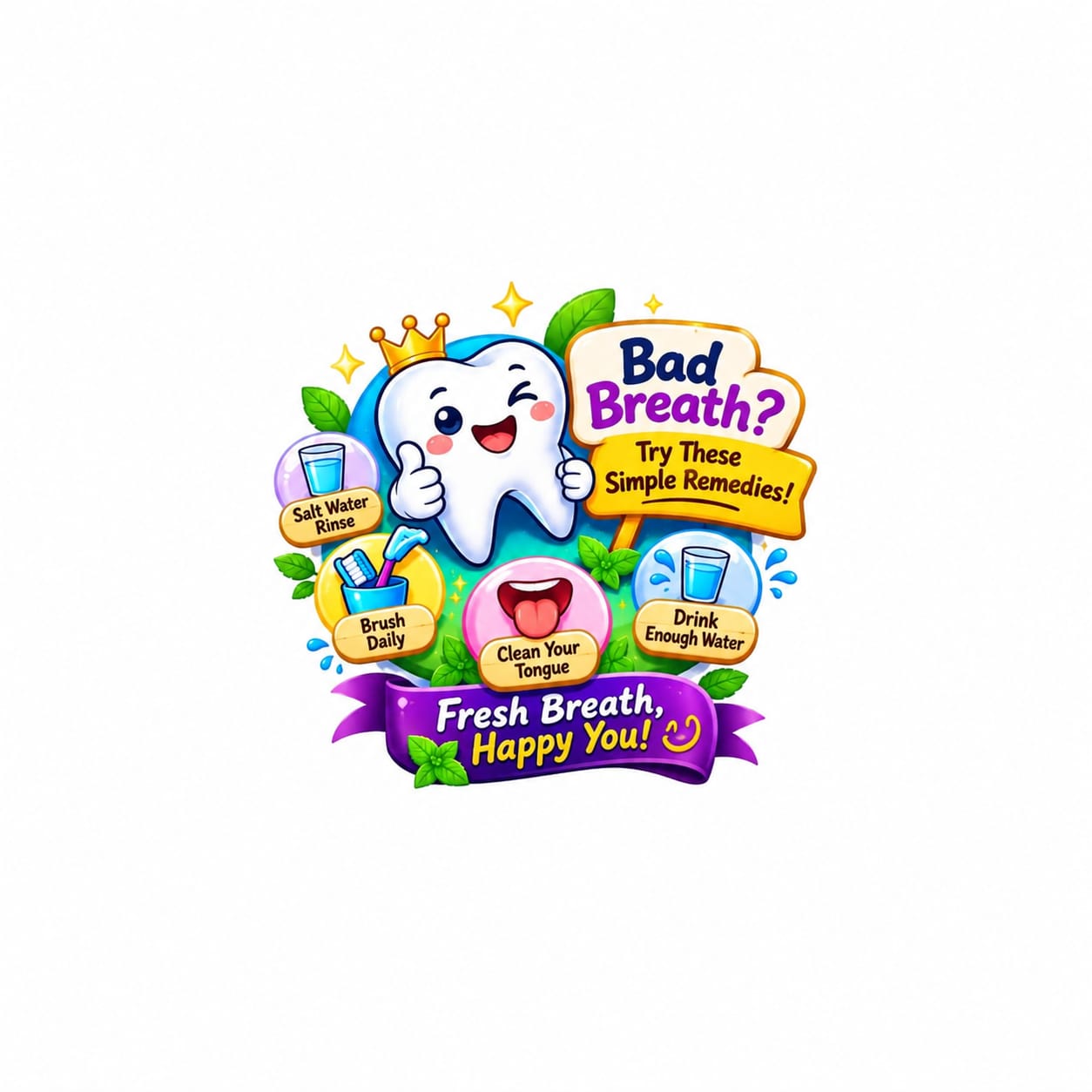
One simple home remedy is rinsing your mouth with warm salt water. Mix a small amount of salt in a glass of warm water, rinse your mouth gently, and spit it out. This can help loosen food particles and temporarily freshen your mouth.
2. Brush Your Teeth Twice a Day
Brushing your teeth regularly is essential for good oral hygiene. Brush twice a day using fluoride toothpaste to remove food particles, plaque, and bacteria that can contribute to bad breath.
3. Clean Your Tongue Daily
Your tongue can collect bacteria and food debris, which may cause unpleasant mouth odour. Gently clean your tongue every day using a tongue scraper or toothbrush to maintain better oral hygiene.
4. Drink Enough Water
A dry mouth can make bad breath worse because saliva helps wash away food particles and bacteria. Drinking enough water throughout the day helps keep your mouth hydrated and supports natural mouth cleansing.
5. Maintain a Healthy Oral Hygiene Routine
Along with brushing and tongue cleaning, floss daily to remove food particles between your teeth. Regular dental check-ups can also help identify problems that may contribute to persistent bad breath.
Keep Your Breath Fresh Every Day!
Maintaining fresh breath doesn’t always require complicated routines. Simple habits like brushing twice daily, cleaning your tongue, drinking enough water, and rinsing your mouth can make a difference.
Remember: Good oral hygiene is the first step towards a cleaner, healthier, and fresher mouth!
If bad breath continues even after maintaining proper oral hygiene, consult a dentist to identify the underlying cause.