
In our busy daily lives, stress, anxiety and constant thoughts can make it difficult to feel relaxed and focused. Sometimes, taking a few minutes to control your breathing can help you slow down and reconnect with yourself.
Anulom Vilom, an ancient yogic breathing technique, is a simple practice that involves inhaling through one nostril and exhaling through the other. It is widely practised as part of yoga and wellness routines to promote relaxation and breathing awareness.
1. What Is Anulom Vilom?
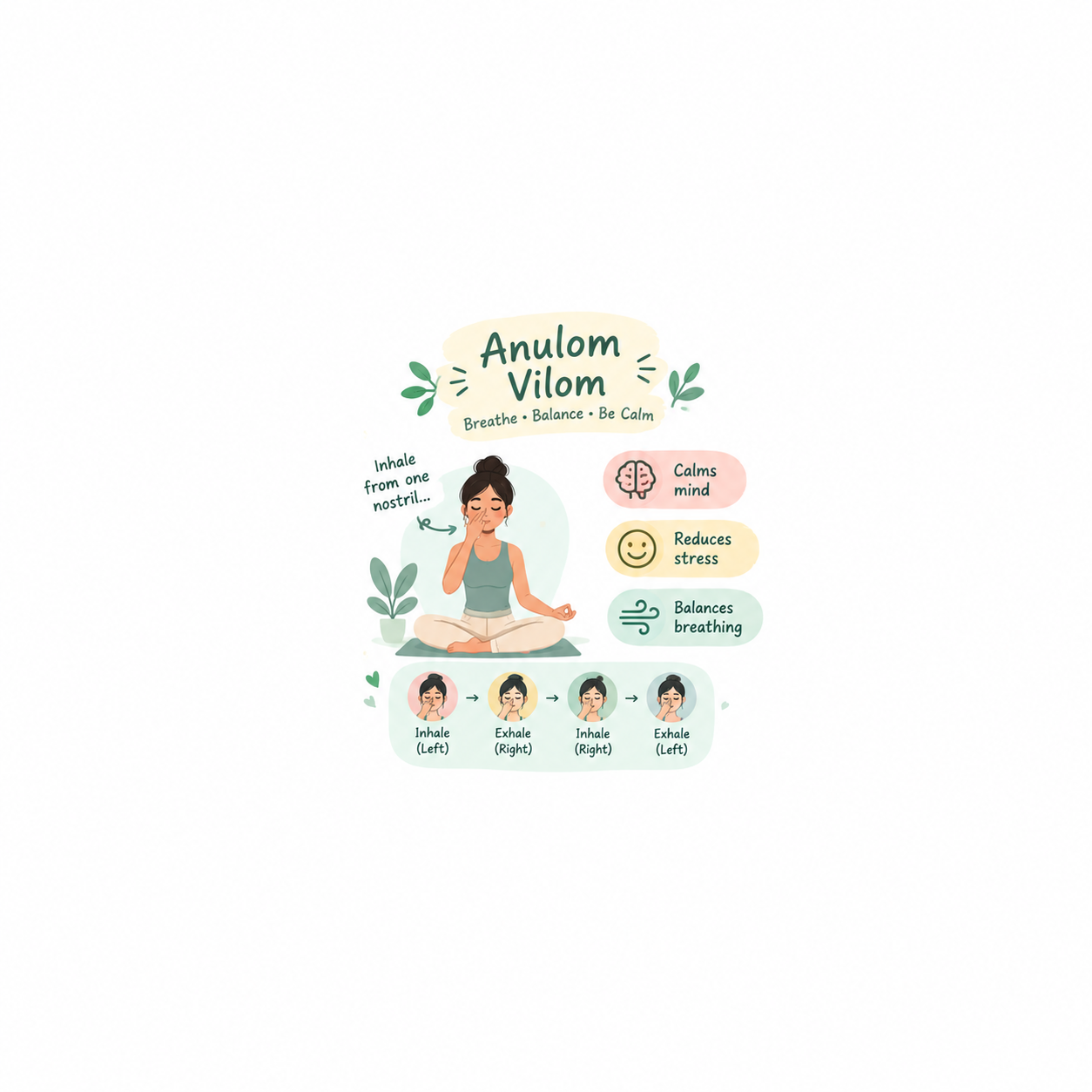
Anulom Vilom is a traditional alternate-nostril breathing exercise in which you breathe in through one nostril while keeping the other closed, and then exhale through the opposite nostril.
By repeating this process in a slow and controlled manner, you bring your attention to your breathing and create a moment of calm for your mind and body.
2. Benefits of Anulom Vilom
- Calms the Mind: Slow, controlled breathing may help you feel relaxed and reduce mental restlessness.
- Helps Manage Stress: Regular mindful breathing can support stress management and emotional well-being.
- Promotes Breathing Awareness: It helps you develop better awareness and control of your breathing pattern.
- Improves Focus: Concentrating on each breath may help you feel more present and attentive.
- Encourages Relaxation: It can become a useful part of your daily yoga and relaxation routine.
3. How to Practise Anulom Vilom
- Sit comfortably with your back straight.
- Close your right nostril using your right thumb.
- Slowly inhale through your left nostril.
- Close your left nostril and release your right nostril.
- Slowly exhale through your right nostril.
- Now inhale through your right nostril and exhale through your left.
Repeat this process gently for a few minutes without forcing your breath.
Make Anulom Vilom a Part of Your Daily Routine
You don’t always need a complicated routine to take care of your mental well-being. A few minutes of mindful breathing, combined with yoga and healthy lifestyle habits, can help you create a more peaceful daily routine.
Remember: Take a deep breath, slow down your thoughts and give yourself a moment of peace. Sometimes, a little breathing practice can make a big difference!
Note: Practise gently and stop if you feel dizzy or uncomfortable. Avoid holding your breath forcefully. If you have any respiratory or cardiovascular condition, consult a healthcare professional before starting.