
Have you ever wondered why a small burp suddenly escapes your mouth after enjoying your favourite meal? It might seem like an ordinary bodily reaction, but there is actually an interesting scientific process happening inside your digestive system!
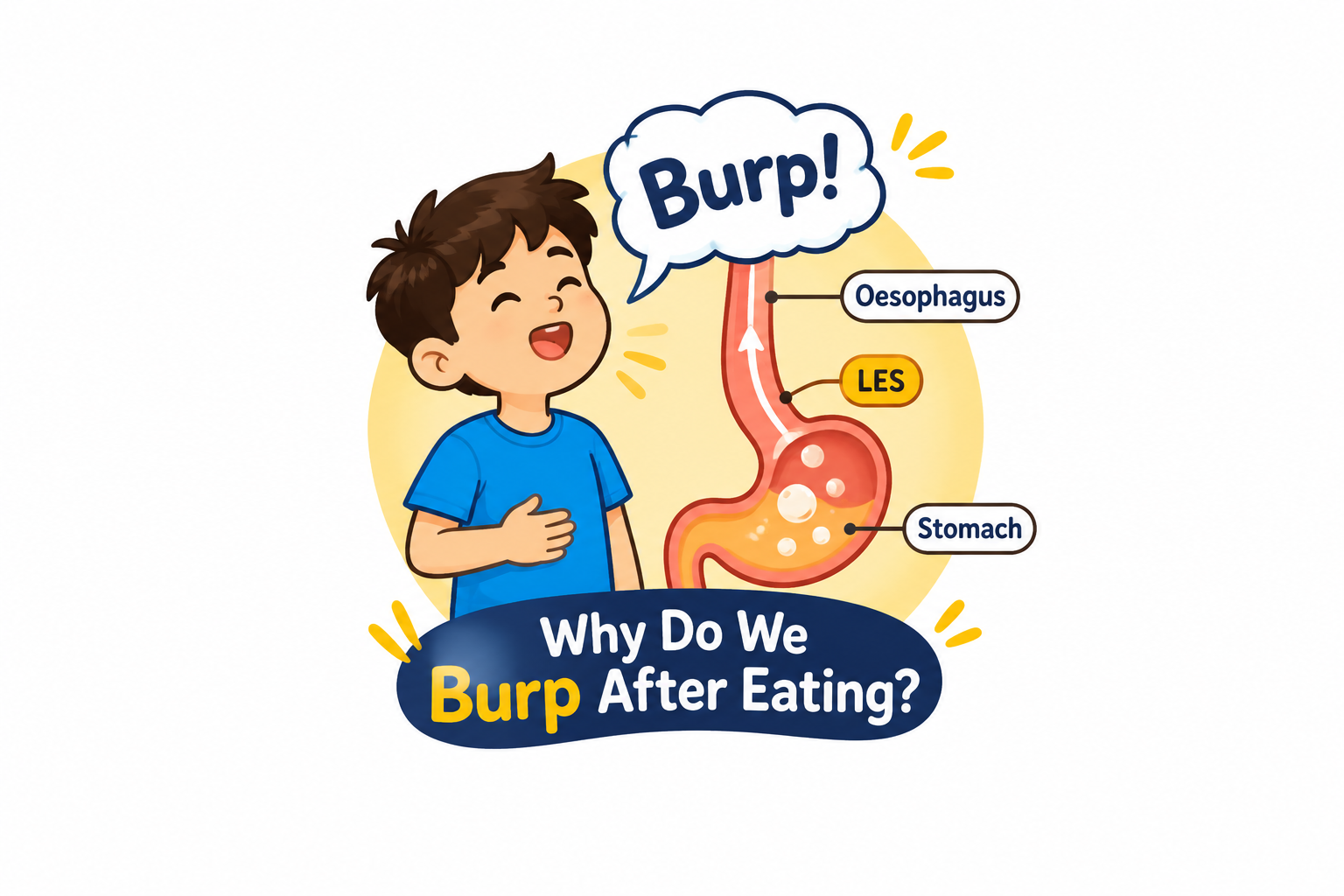
Every time you eat or drink, you may unknowingly swallow small amounts of air along with your food. This air travels down your food pipe (oesophagus) and enters your stomach. As more air collects inside, it can create a feeling of fullness, bloating, or pressure.
But how does that air find its way back out?
The Journey of Air Inside Your Stomach
Let’s understand what happens inside your body, step by step.
1. It Starts With Every Bite
When you eat too quickly, talk while eating, drink through a straw, chew gum, or consume carbonated beverages, you may swallow extra air. This process is scientifically known as aerophagia.
2. Air Collects Inside Your Stomach
Unlike food, swallowed air does not need to be digested. It often gathers in the upper part of your stomach, creating pressure and sometimes making you feel uncomfortably full.
3. Your Body Opens a Natural Gateway
Here comes the interesting part!
Between your oesophagus (food pipe) and stomach is a circular muscle called the Lower Oesophageal Sphincter (LES). It normally remains closed to prevent stomach contents from flowing backwards.
When your body needs to release excess air, this muscle temporarily relaxes, allowing the trapped gas to move upwards.
4. The Air Travels Back Up
Once the LES relaxes, the air moves from your stomach into the oesophagus and then travels towards your mouth.
5. And Finally… You Burp!
The air escapes through your mouth, producing the familiar sound we call a burp or belch. This natural process helps your body release excess swallowed air and reduce stomach pressure.
Why Do Some People Burp More Than Others?
Burping is normal, but certain habits can make it happen more frequently:
- Eating too quickly: You may swallow more air while rushing through meals.
- Carbonated drinks: Soda and sparkling beverages release carbon dioxide gas inside your digestive system.
- Talking while eating: This can increase the amount of air you swallow.
- Chewing gum: Frequent chewing may cause you to swallow additional air.
- Large meals: Eating large portions can increase stomach fullness and discomfort.
How Can You Reduce Excessive Burping?
A few simple lifestyle changes can help:
- Eat slowly and chew your food properly.
- Avoid drinking too many carbonated beverages.
- Try not to talk continuously while eating.
- Avoid overeating and choose smaller portions when needed.
- Limit habits that cause you to swallow excess air.
The Final Takeaway
Burping isn’t just a random sound; it’s your body’s natural way of releasing excess air!
The next time you burp after a meal, remember that your digestive system is carrying out a small but fascinating process involving your stomach, oesophagus, and LES.
Your body has its own way of managing what goes in — and sometimes, that includes letting a little air out!
Note: Occasional burping is completely normal. However, if it becomes persistent or is accompanied by severe abdominal pain, difficulty swallowing, vomiting, or unexplained weight loss, consult a healthcare professional.