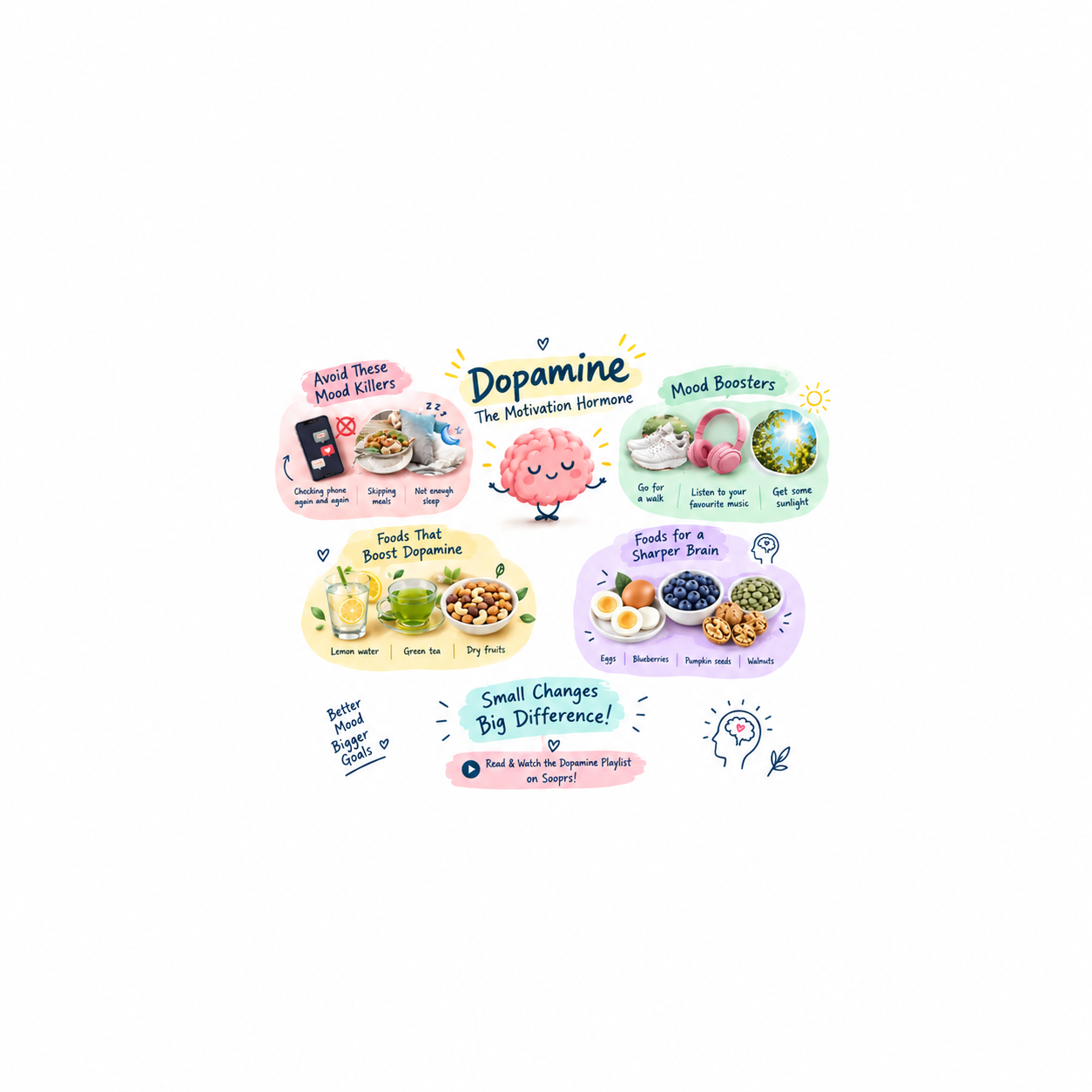

Dopamine is an important chemical messenger in the brain that plays a role in motivation, focus, energy, pleasure, and the feeling of reward. It helps you stay interested in activities, work towards goals, and feel motivated to complete everyday tasks.
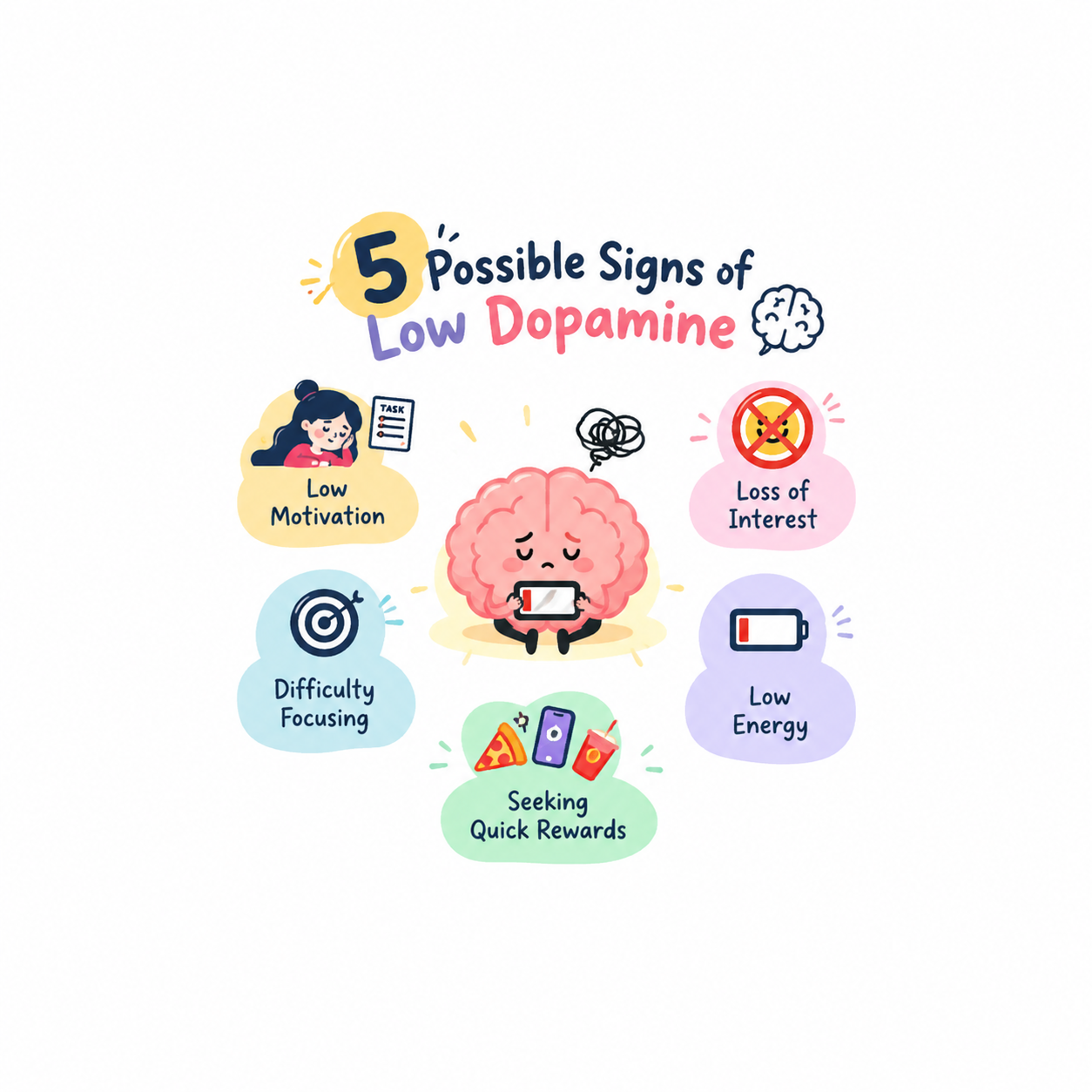
When dopamine-related brain activity is not functioning optimally, you may notice certain changes in your daily habits, mood, and productivity. Here are 5 possible signs associated with low dopamine activity that you should be aware of.
1. Low Motivation
You know what you need to do, but you struggle to get started. Even simple tasks may feel difficult, and you may find yourself delaying important work despite having clear goals.
2. Loss of Interest
Activities you once enjoyed may no longer feel as exciting or rewarding. Hobbies, socialising, and other pleasurable experiences might not give you the same level of satisfaction as before.
3. Difficulty Focusing
You may find it difficult to concentrate on work, studies, or everyday tasks. Your mind may wander frequently, making it harder to stay attentive, organise your thoughts, and complete activities efficiently.
4. Low Energy
You may frequently feel tired, mentally drained, or less active throughout the day. Even when you get enough rest, you might struggle to maintain enthusiasm and energy for your daily responsibilities.
5. Seeking Quick Rewards
You may frequently crave instant gratification through sweets, junk food, endless scrolling, online shopping, or other quick-reward activities. These habits can become a way of seeking temporary pleasure or stimulation.
Take Care of Your Brain Health
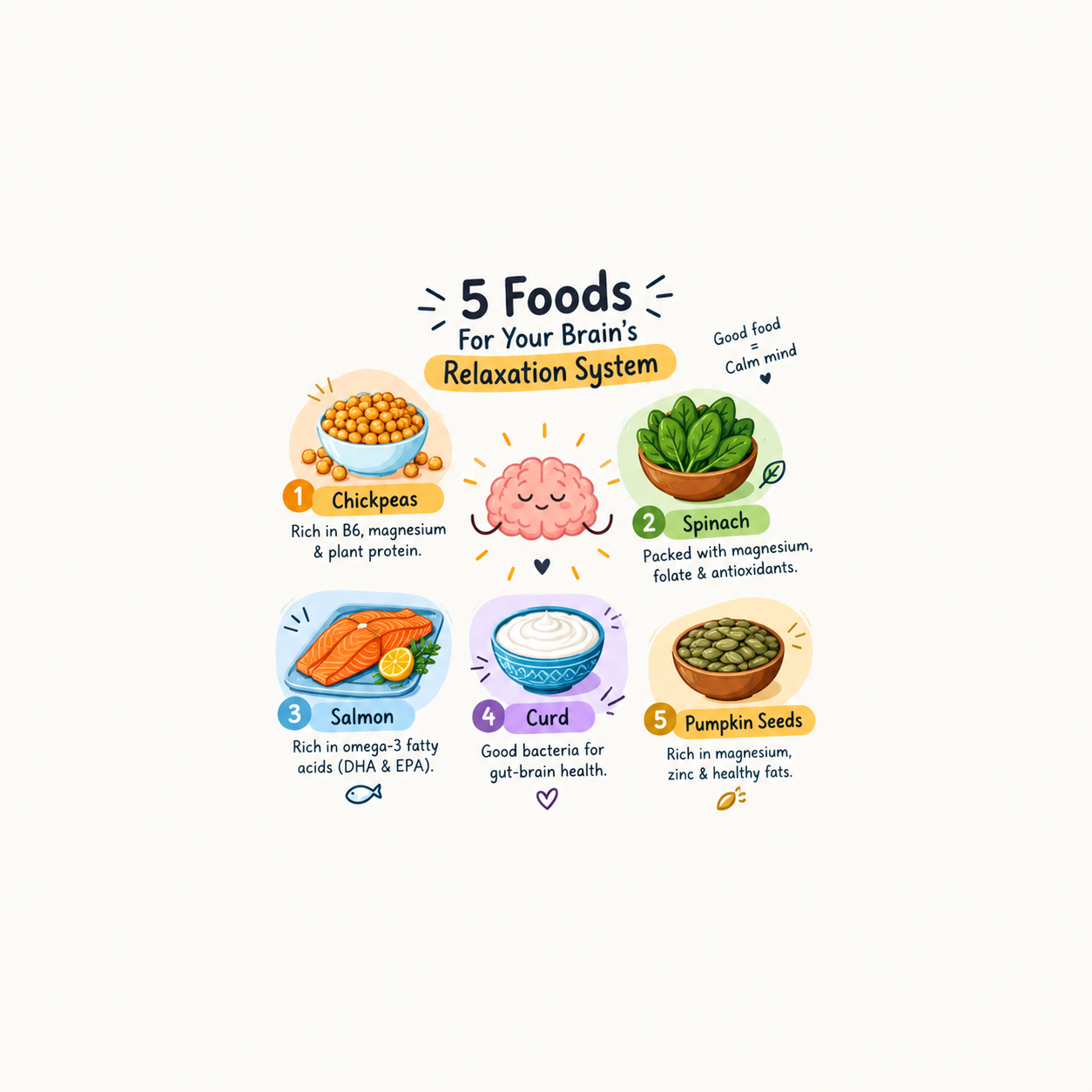
Your motivation, focus, and mood are influenced by several factors, including sleep, nutrition, stress, physical activity, and overall brain health. Maintaining a balanced lifestyle, eating nutritious foods, exercising regularly, and getting adequate sleep can support healthy brain function.
Remember: These signs do not necessarily mean you have low dopamine. They can also be associated with other physical or mental health conditions. If these symptoms persist or interfere with daily life, consider speaking with a healthcare professional.