

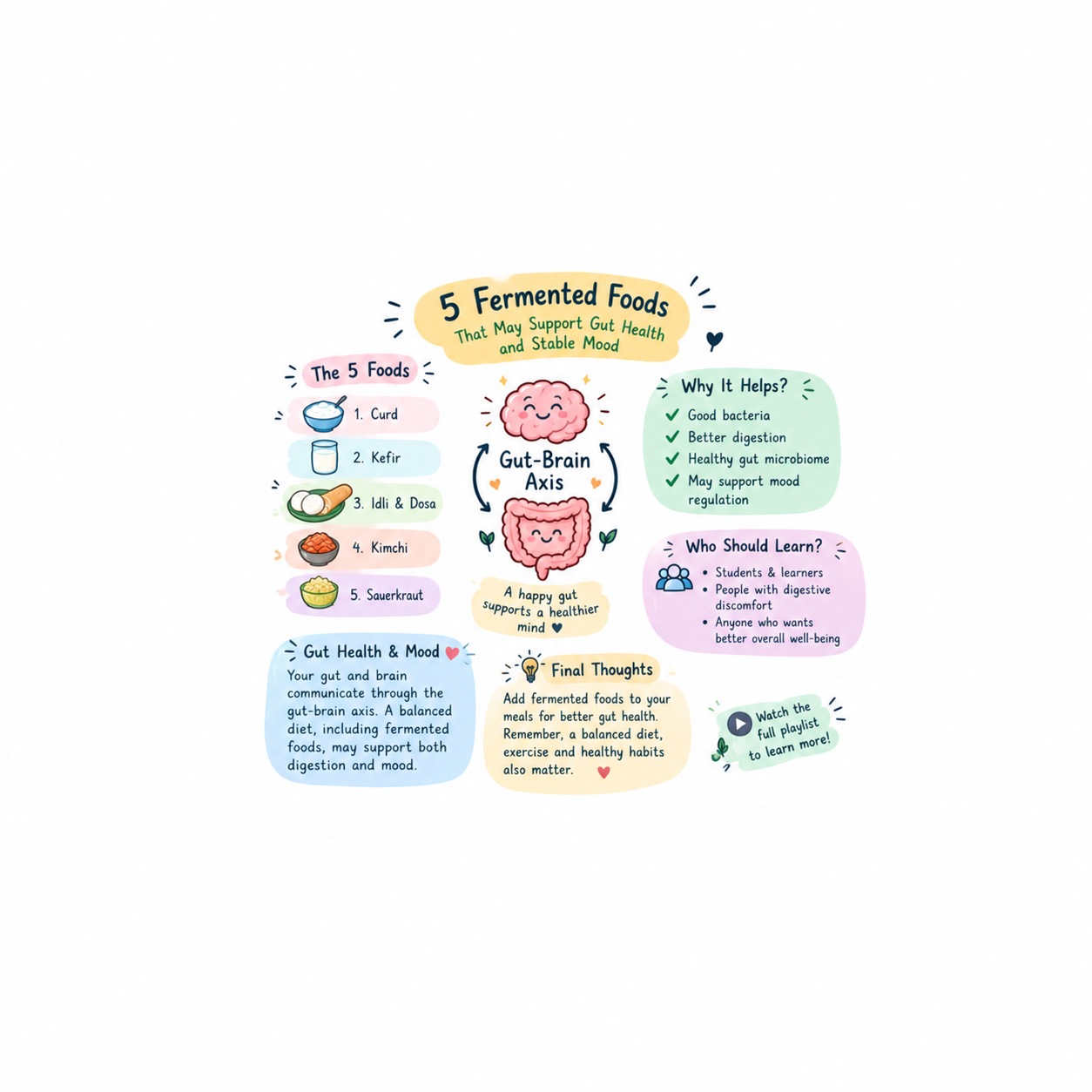
Gut health plays an important role in our overall well-being. It is not only responsible for digestion but is also connected to our brain through the gut-brain axis, a communication system between the digestive system and the brain.
Fermented foods contain beneficial microorganisms that may help maintain a healthy gut microbiome. Including these foods in your daily diet may support digestion and contribute to overall health and mood regulation.
Here are five fermented foods that can be a part of a healthy eating routine.
1. Curd
Curd is one of the most common fermented foods in Indian households. It contains beneficial bacteria that may support digestion and maintain a healthy balance of gut microorganisms. It is also a good source of protein and calcium.
2. Kefir
Kefir is a fermented milk drink prepared using kefir grains. It contains a variety of microorganisms that may help support gut microbial diversity. It also provides protein, calcium and other nutrients that contribute to overall health.
3. Idli and Dosa
Idli and dosa are traditional Indian foods made using fermented rice and lentil batter. The fermentation process improves the texture and may increase the availability of certain nutrients. They are easy to digest for many people and can be included in a balanced diet.
4. Kimchi
Kimchi is a traditional Korean fermented food commonly prepared using cabbage, radish and spices. It contains fibre and beneficial microorganisms that may support digestive health. Its vegetable ingredients also provide vitamins and antioxidants.
5. Sauerkraut
Sauerkraut is made by fermenting finely shredded cabbage with salt. It contains fibre and fermentation-derived microorganisms that may help support a healthy gut environment. Unpasteurised varieties are generally preferred when looking for live cultures.
How Is Gut Health Connected to Mood?
Our gut and brain are continuously connected through the gut-brain axis. Gut microorganisms participate in several biological processes associated with digestion, inflammation and brain function.
A balanced gut microbiome may contribute to overall well-being and may influence processes involved in mood regulation. This is why maintaining good digestive health is an important part of a healthy lifestyle.
Who Should Learn About This?
This topic is particularly useful for students interested in nutrition and the gut-brain connection, people experiencing occasional digestive discomfort, and individuals who want to understand how food choices may influence their overall well-being.
Anyone interested in improving their eating habits can also benefit from learning about fermented foods and their role in digestive health.
Final Thoughts
A healthy gut is an important part of a healthy body and mind. Including fermented foods such as curd, kefir, idli, dosa, kimchi and sauerkraut in your meals can be a simple step towards supporting digestive health.
Remember that fermented foods are not a treatment for digestive or mental health conditions. A balanced diet, regular physical activity and healthy daily habits all contribute to overall well-being.
Want to learn more about the connection between gut health and mental well-being? Watch the complete video playlist to understand how your gut and brain work together and why digestive health matters.