
Strong and healthy bones are the foundation of an active lifestyle. Our bones support our body, protect important organs, and help us move comfortably every day. But maintaining bone strength requires more than just exercise—it also depends on giving your body the right nutrients through a balanced diet.
Calcium, protein, magnesium, vitamin D, phosphorus, and other essential nutrients all contribute to healthy bones. Including nutrient-rich foods in your everyday meals can be a simple and natural way to support your overall bone health.
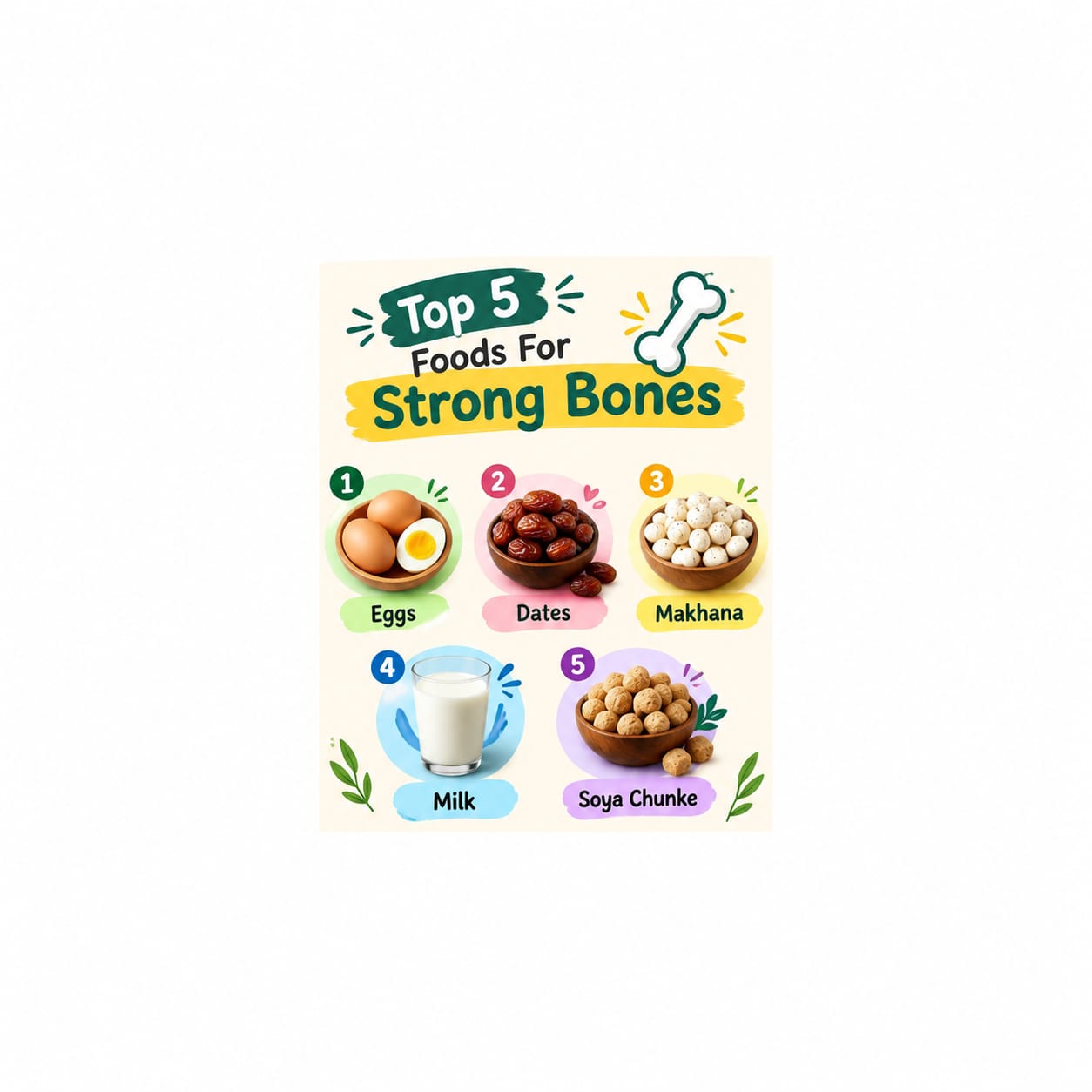
Here are 5 nutritious foods you can add to your daily diet to support stronger bones:
1. Eggs – A Protein-Rich Choice
Eggs are an easy and versatile source of high-quality protein, which is important for maintaining muscles as well as the overall structure that supports your bones.
They also contain several essential nutrients and are easy to include in your everyday meals.
How to enjoy them:
Have boiled eggs for breakfast, add them to a salad, or prepare a healthy vegetable omelette.
👉 Simple choice. Powerful nutrition.
2. Dates – A Naturally Nutritious Sweet
Dates are naturally sweet and provide minerals such as magnesium and potassium, along with other nutrients.
Instead of reaching for highly processed sweets, a few dates can be a convenient addition to a balanced diet. They can also be paired with nuts or seeds for a nutritious snack.
How to enjoy them:
Have a few dates as a snack or add chopped dates to oatmeal, smoothies, or homemade energy bites.
👉 A naturally sweet way to add more nutrition to your day.
3. Makhana – A Smart Snacking Option
Makhana, also known as fox nuts, is a popular light snack that can easily become part of a healthy eating routine.
It provides minerals and other nutrients while offering a satisfying alternative to many highly processed snack foods.
How to enjoy them:
Roast makhana and season it lightly with spices for an easy evening snack.
👉 Crunchy, light, and easy to add to your routine.
4. Milk – A Classic Bone-Friendly Food
Milk is well known for being a source of calcium and protein, two important nutrients for maintaining healthy bones.
Regularly including calcium-rich foods in your diet can help support your body’s nutritional needs. If you don’t consume dairy, other calcium-rich alternatives can also be considered.
How to enjoy it:
Have milk with breakfast, add it to smoothies, or enjoy a warm glass as part of your evening routine.
👉 Make calcium-rich foods a regular part of your meals.
5. Soya Chunks – Plant-Based Protein Power
Soya chunks are an excellent source of plant-based protein and can be a versatile addition to a balanced diet.
Protein plays an important role in maintaining muscles and supporting the body’s overall structure. Soya chunks are also easy to prepare and can be incorporated into a variety of Indian meals.
How to enjoy them:
Add soya chunks to vegetable curries, pulao, stir-fries, salads, or healthy wraps.
👉 A simple plant-based option for protein-rich meals.
Strong Bones Start With Better Choices
Supporting your bone health doesn’t have to mean making complicated changes to your lifestyle. Small improvements in your everyday meals can make your diet more nutritious and balanced.
Along with these foods, remember that regular physical activity, adequate vitamin D, sufficient protein, and a balanced overall diet are also important for maintaining healthy bones.
Your Everyday Bone-Health Checklist
🥚 Protein-rich foods
↓
🥛 Calcium-rich foods
↓
☀️ Adequate vitamin D
↓
🏃 Regular physical activity
↓
🦴 Stronger, healthier bones
The goal isn’t perfection—it’s consistency. Start by adding more nutritious foods to your meals and gradually build habits that support your long-term well-being.
Eat Better. Move More. Stay Strong.
Your bones support you every single day. Give them the nutrition and care they deserve.
Choose nourishing foods today for a stronger and healthier tomorrow.
Note: Food alone cannot prevent or treat bone disorders. Individual nutritional needs vary, so consult a qualified healthcare professional or dietitian if you have specific bone-health concerns.