

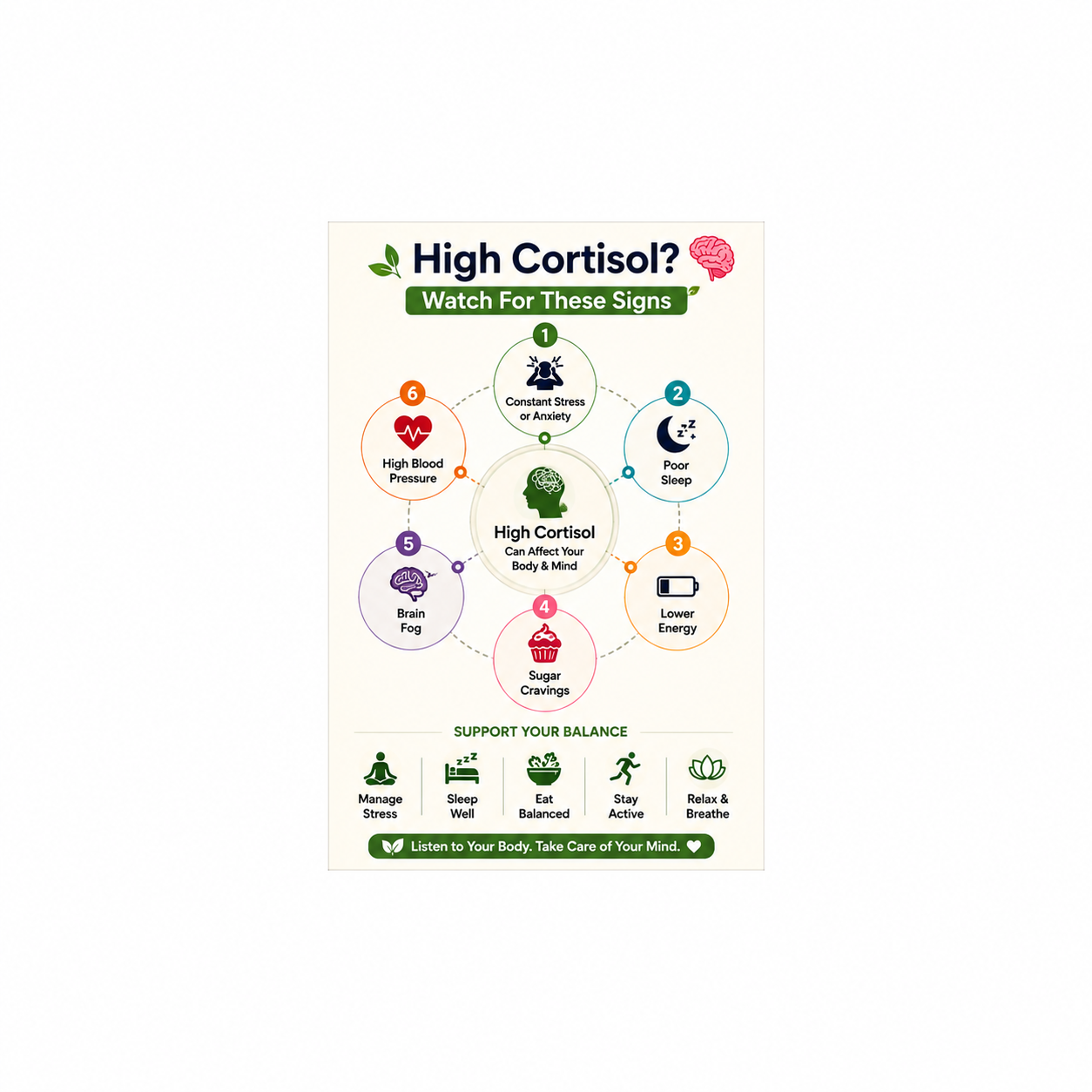
Cortisol is a hormone that helps your body respond to stress and plays an important role in energy, metabolism, blood pressure, and sleep. However, ongoing stress can affect cortisol regulation and may be associated with a range of physical and mental symptoms.
If you regularly experience several of these signs, it may be worth paying closer attention to your stress levels, sleep, lifestyle, and overall health.
Stress & Cortisol Flow
Ongoing Stress
↓
Cortisol Regulation Can Be Affected
↓
Changes in Sleep • Energy • Appetite
↓
Physical & Mental Symptoms
↓
Time to Review Your Lifestyle & Well-Being
1. Constant Stress or Anxiety
Feeling constantly stressed, tense, or on edge can be a sign that your body is dealing with prolonged stress. Persistent stress may also make it harder to relax and switch off mentally.
2. Poor or Disturbed Sleep
Difficulty falling asleep, waking frequently, or feeling unrefreshed in the morning can sometimes occur alongside prolonged stress and disrupted cortisol patterns.
3. Lower Energy
Feeling unusually tired or lacking energy throughout the day may be linked to many factors, including poor sleep, stress, nutrition, or an underlying health issue.
4. Frequent Sugar Cravings
Long periods of stress can influence appetite and food preferences. Some people may notice stronger cravings for sweet or high-calorie foods, especially when they are tired or stressed.
5. Brain Fog
Difficulty concentrating, forgetfulness, or feeling mentally sluggish can occur when you’re under prolonged stress or not getting enough quality sleep.
6. High Blood Pressure
Cortisol is involved in the body’s stress response and can influence cardiovascular function. Persistently high blood pressure, however, can have many causes and should not automatically be attributed to cortisol.
What Can You Do?
Supporting healthy stress management starts with simple daily habits:
Quality Sleep → Balanced Nutrition → Regular Movement → Stress Management → Consistent Routine
Small lifestyle changes can make a meaningful difference to your overall well-being. Listen to Your Body
Experiencing one of these symptoms does not necessarily mean you have high cortisol. These signs can have many different causes. If symptoms are persistent, severe, or you are concerned about your blood pressure or health, consider speaking with a qualified healthcare professional.
Manage Stress. Prioritize Sleep. Support Your Well-Being.