
Small Dietary Choices. Stronger Heart Health.
Your heart works continuously to keep your body moving, supplying oxygen and nutrients to every part of you. Taking care of it doesn’t always require complicated changes. A balanced diet, regular physical activity, good sleep, and healthy lifestyle habits can all contribute to better cardiovascular health.
One simple place to start is your plate.
Certain foods contain fiber, antioxidants, healthy fats, vitamins, minerals, and beneficial plant compounds that can support overall heart health when included as part of a balanced diet.
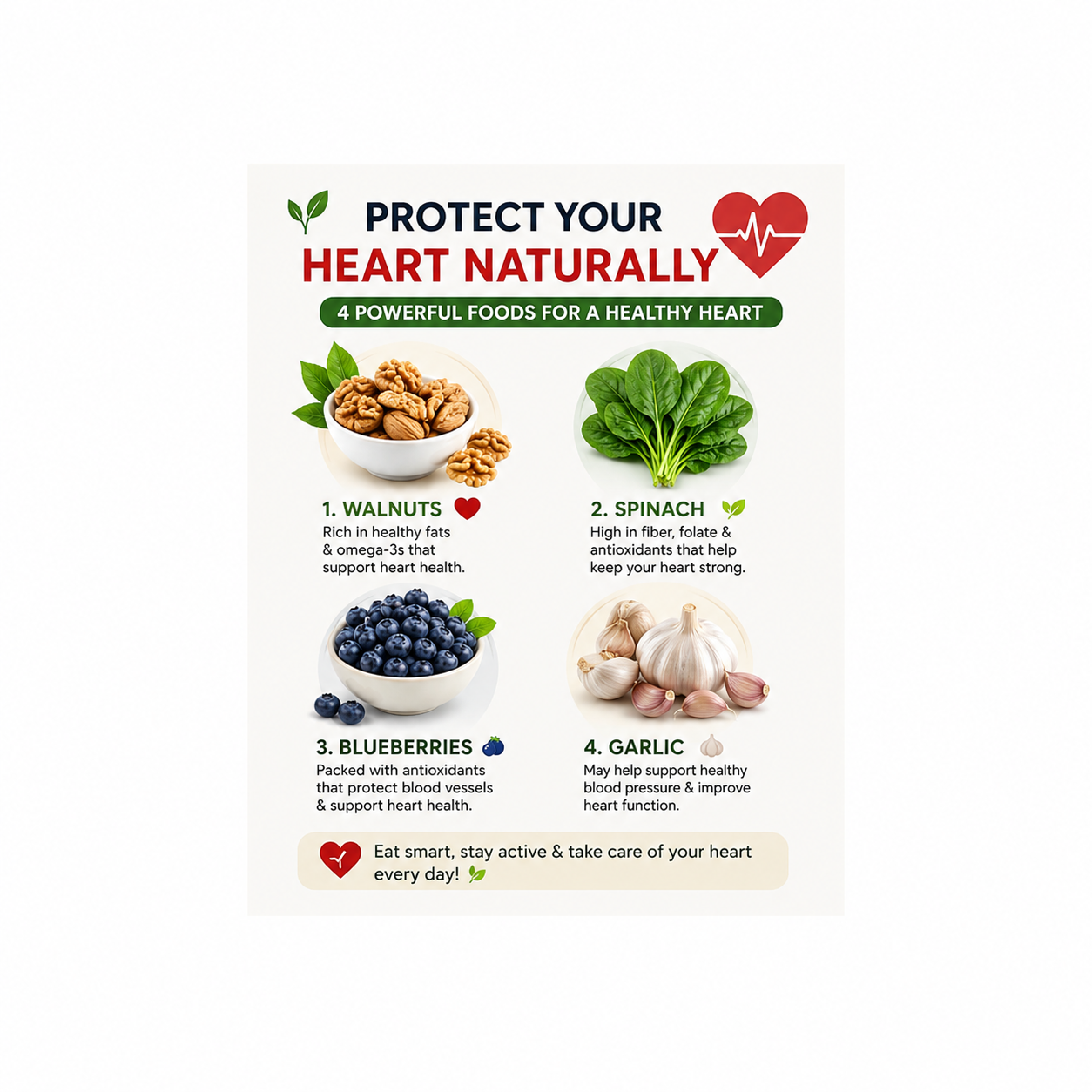
Here are 4 nutritious foods that deserve a place in a heart-friendly eating routine.
1. Walnuts – A Heart-Friendly Crunch
Walnuts are a nutritious source of unsaturated fats, plant-based omega-3 fatty acid ALA, fiber, and antioxidant compounds.
Replacing foods high in saturated fats with foods containing healthier unsaturated fats can be a smart dietary choice for cardiovascular health.
Walnuts are also convenient, making them an easy addition to everyday meals.
Why add walnuts?
- Provides plant-based omega-3 ALA
- Contains heart-friendly unsaturated fats
- Provides fiber and beneficial plant compounds
- Makes a satisfying snack
Simple idea:
Add a small handful of walnuts to oatmeal, yogurt, salads, smoothies, or fruit bowls. Choose plain or lightly roasted varieties without excessive added salt or sugar.
2. Spinach – Green Goodness for Your Heart
Leafy greens such as spinach are packed with important nutrients and plant compounds. Spinach provides folate, potassium, magnesium, vitamin C, vitamin K, fiber, and carotenoids.
Including a variety of vegetables in your diet can help you build a nutrient-dense eating pattern while increasing your intake of fiber and other beneficial compounds.
Why choose spinach?
- Rich in vitamins and minerals
- Provides dietary fiber
- Contains antioxidant plant compounds
- Easy to include in everyday meals
Simple idea:
Add spinach to soups, omelets, sandwiches, salads, curries, stir-fries, or smoothies. Combining leafy greens with other colorful vegetables makes your meals even more nutritious.
3. Blueberries – A Colorful Antioxidant Boost
Blueberries are known for their deep blue-purple color, which comes from naturally occurring plant compounds called anthocyanins.
They also provide fiber, vitamin C, vitamin K, and other beneficial plant compounds.
Adding berries to your diet is an easy way to increase fruit variety while enjoying a naturally sweet food.
Why include blueberries?
- Rich in anthocyanins and other plant compounds
- Provides dietary fiber
- Contains vitamin C and vitamin K
- Naturally sweet and versatile
Simple idea:
Enjoy blueberries with plain yogurt, oats, smoothies, or whole-grain breakfast bowls. Fresh or frozen blueberries can both be convenient options.
4. Garlic – Small Ingredient, Big Flavor
Garlic has been used in cooking for centuries and contains sulfur-containing compounds that contribute to its distinctive flavor and aroma.
Research suggests that garlic may have beneficial effects on certain cardiovascular risk factors, although it should be viewed as one part of an overall healthy lifestyle—not a replacement for medical treatment.
Why add garlic?
- Contains beneficial sulfur compounds
- Adds flavor without requiring excessive salt
- Provides antioxidant compounds
- Easy to incorporate into many meals
Simple idea:
Use fresh garlic in vegetable dishes, soups, dals, stir-fries, sauces, roasted vegetables, and homemade dressings.
Build a Heart-Friendly Plate
The goal isn’t to eat one “superfood” every day. A healthier approach is to create a balanced eating pattern that includes a variety of nutritious foods.
Try this simple combination:
Walnuts → Healthy fats + plant-based omega-3
Spinach → Fiber + vitamins + minerals
Blueberries → Anthocyanins + fiber
Garlic → Flavor + beneficial plant compounds
Combine these with whole grains, beans, fruits, vegetables, and other minimally processed foods for a more balanced approach to heart health.
Your Heart Health Starts With Everyday Habits
A heart-friendly lifestyle is built through small choices repeated consistently.
Along with nutritious food, focus on:
✅ Staying physically active
✅ Getting enough quality sleep
✅ Managing stress
✅ Limiting excess salt and highly processed foods
✅ Avoiding tobacco
✅ Maintaining a healthy weight
✅ Getting regular health checkups
No single food can guarantee a healthy heart. But when nutritious foods become part of your regular routine, they can contribute to a dietary pattern that supports long-term cardiovascular wellness.
Eat Smart. Move More. Care for Your Heart.
Your heart works for you every second of the day. Give it the support it deserves—one healthy choice, one meal, and one habit at a time.