
When cold and flu season arrives, taking care of your immune system becomes even more important. While no single food can prevent a cold or flu, a balanced, nutrient-rich diet can provide your body with vitamins, minerals, antioxidants, and other nutrients that support normal immune function.
Along with adequate sleep, regular movement, hydration, good hygiene, and appropriate medical care when needed, adding nutritious foods to your daily meals can be a simple way to support your overall wellness.
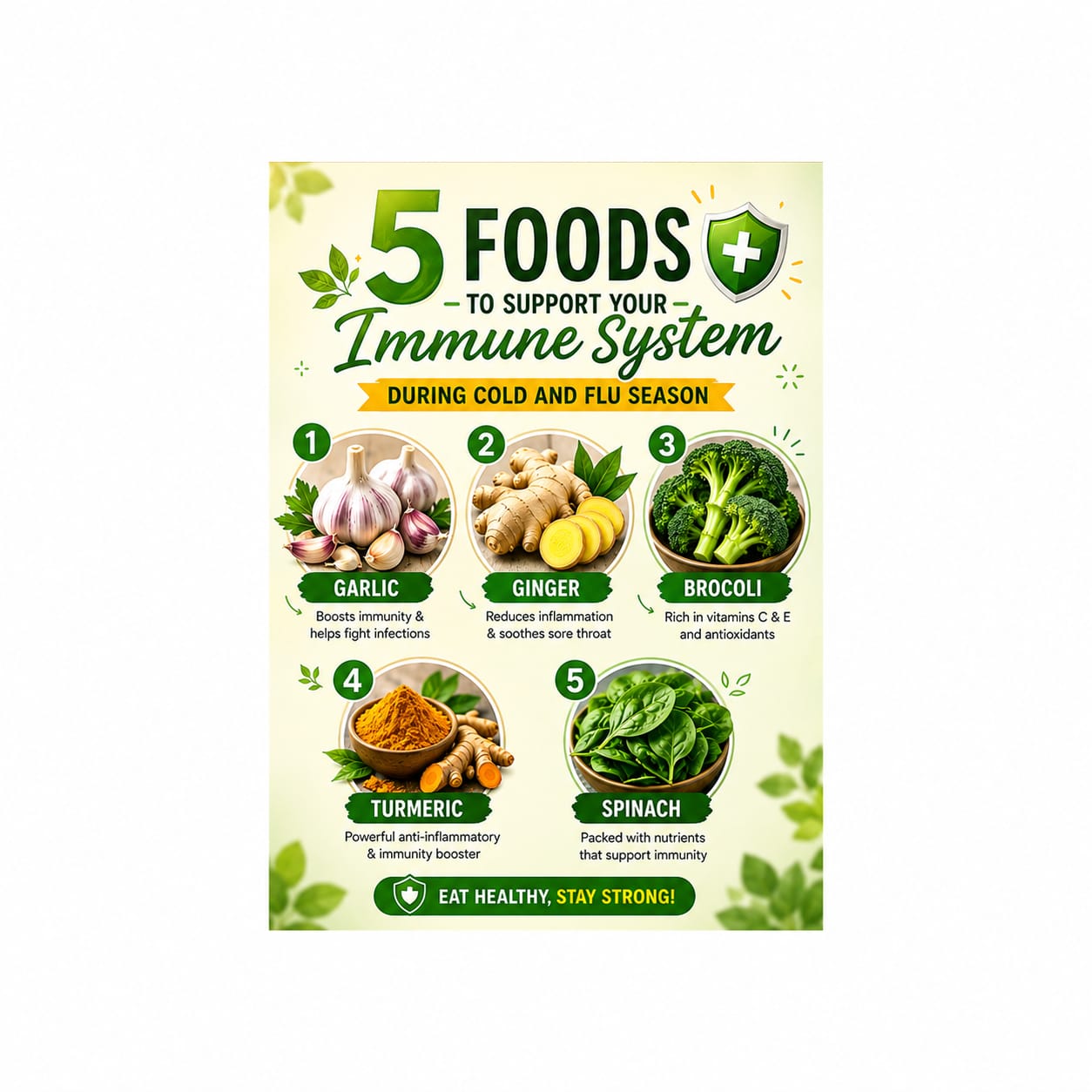
Here are 5 wholesome foods that can be a valuable part of your diet during cold and flu season.
1. Garlic — A Flavorful Immune-Supporting Food
Garlic is more than just a flavorful ingredient. It contains sulfur-containing compounds, including allicin, which are produced when fresh garlic is chopped or crushed.
Garlic also provides small amounts of several nutrients and contains plant compounds with antioxidant properties.
Why include garlic in your diet?
A varied diet containing vegetables and other plant foods can contribute to overall nutritional quality. Garlic is an easy way to add flavor without relying heavily on salt or highly processed sauces.
Easy ways to add garlic:
- Add chopped garlic to salads or dressings.
- Mix it into soups and vegetable dishes.
- Add it to curries and stir-fries.
- Use roasted garlic with whole-grain bread.
- Combine garlic with roasted vegetables.
Simple idea:
Garlic + Vegetables + Balanced Meal = Flavorful Everyday Nutrition
Tip: Crushing or chopping garlic and allowing it to sit briefly before cooking may help preserve some of its beneficial sulfur compounds.
2. Ginger — A Warming Addition to Your Diet
Ginger has been used in traditional food and wellness practices for centuries. Its naturally occurring compounds, particularly gingerols, contribute to its distinctive flavor and are being studied for their biological properties.
During colder months, ginger can also make meals and beverages feel especially comforting.
Why add ginger?
Ginger contains plant compounds with antioxidant and anti-inflammatory properties. It can also be useful as a flavorful alternative to heavily sweetened drinks.
Try ginger in:
- Warm ginger tea
- Vegetable soups
- Curries
- Salad dressings
- Stir-fried vegetables
- Warm water with ginger and lemon
A simple winter combination:
Ginger + Warm Beverage + Hydration = A Comforting Seasonal Habit
Remember that ginger is a supportive food, not a treatment or cure for cold or flu.
3. Broccoli — A Nutrient-Dense Vegetable
Broccoli is one of the easiest vegetables to add to a healthy diet. It provides vitamin C, vitamin K, folate, fiber, and several plant compounds.
Vitamin C is particularly important because it contributes to normal immune system function.
Why make broccoli part of your meals?
Broccoli is nutrient-dense while being relatively low in calories. Its fiber content can also contribute to a healthy digestive system.
Delicious ways to enjoy broccoli:
- Steam it lightly and season with herbs.
- Add it to soups.
- Add it to an omelet or egg scramble.
- Mix it into rice or grain bowls.
- Add it to salads.
- Roast it with other vegetables.
Build a colorful plate:
Broccoli + Other Vegetables + Protein + Whole Grains
A diverse plate gives you a broader range of nutrients than relying on one “superfood.”
4. Turmeric — A Golden Spice for Everyday Meals
Turmeric is widely used in Indian and South Asian cooking and is known for its bright golden color. It contains curcumin, a plant compound that has been extensively studied for its antioxidant and anti-inflammatory properties.
Adding turmeric to everyday meals is an easy way to increase the variety of plant compounds in your diet.
How can you use turmeric?
- Add it to curries.
- Mix it into soups.
- Season roasted vegetables.
- Add a small amount to rice dishes.
- Enjoy a turmeric-based warm drink with minimal added sugar.
Make it part of your routine:
Turmeric + Vegetables + Balanced Meal = A Flavorful Nutrient-Rich Choice
Turmeric should complement a balanced diet rather than replace medical treatment or prescribed medicines.
5. Spinach — A Green Leafy Powerhouse
Spinach is a nutrient-rich leafy green that can easily fit into breakfast, lunch, dinner, or snacks.
It provides nutrients such as folate, vitamin A, vitamin C, vitamin K, iron, and magnesium, along with beneficial plant compounds.
Why add leafy greens?
Eating a variety of vegetables helps provide the body with a broad range of nutrients. Spinach is particularly versatile, making it easy to include regularly.
Add spinach to:
- Fresh salads
- Omelets
- Smoothies
- Soups
- Curries
- Sandwiches and wraps
An easy habit:
One handful of leafy greens → More variety in your daily diet
Your 5-Food Immune-Support Checklist
| Food | What It Adds to Your Diet | Easy Way to Eat It |
|---|---|---|
| Garlic | Sulfur-containing plant compounds | Curries, soups, vegetables |
| Ginger | Gingerols and other plant compounds | Tea, soups, curries |
| Broccoli | Vitamin C, fiber & other nutrients | Steamed, roasted, salads |
| Turmeric | Curcumin & other plant compounds | Curries, vegetables, warm drinks |
| Spinach | Vitamins, minerals & fiber | Salads, soups, omelets |
Build Your Immune-Supportive Plate
You don’t need to eat all five foods every day. Instead, focus on creating variety across your meals.
Try this simple plate formula:
🥦 Vegetables
+
🍗 Protein Source
+
🌾 Whole Grains or Other High-Fiber Carbohydrate
+
🥑 Healthy Fats
+
💧 Water
This approach provides a broader range of nutrients and makes healthy eating easier to maintain.
Cold & Flu Season Wellness Routine
Food is only one part of staying well during cold and flu season.
Combine nutritious meals with:
🥗 Eat a Variety of Foods
↓
💧 Stay Hydrated
↓
😴 Prioritize Quality Sleep
↓
🚶 Stay Physically Active
↓
🧼 Practice Good Hygiene
↓
🧘 Manage Everyday Stress
↓
Support Your Overall Wellness
If you develop significant symptoms, symptoms that are getting worse, difficulty breathing, dehydration, or other concerning signs, seek appropriate medical advice.
Don’t Fall for the “One Super food” Myth
It’s tempting to look for one food that can “boost immunity” instantly, especially during cold and flu season. But your immune system is complex and depends on many factors.
Instead of focusing on a single ingredient, focus on overall dietary quality.
Think:
Variety > One Superfood
Consistency > Quick Fixes
Balanced Meals > Extreme Diets
Healthy Lifestyle > One Magic Ingredient
These five foods can be part of a nutritious diet, but they should complement—not replace—adequate sleep, hydration, hygiene, physical activity, and appropriate healthcare.
Make Healthy Eating a Daily Habit
Cold and flu season is a great reminder to pay attention to your everyday wellness. Adding garlic, ginger, broccoli, turmeric, and spinach to your meals can make your diet more colorful, flavorful, and nutrient-rich.
You don’t need complicated recipes or expensive supplements to start making better food choices.
Start small:
Add garlic to dinner.
Have ginger in a warm beverage.
Add broccoli to lunch.
Include turmeric in your cooking.
Add spinach to breakfast or dinner.
Small choices → Better habits → More balanced nutrition → Better everyday wellness
Your Health Starts With Everyday Choices
A strong wellness routine isn’t built in one day. It’s created through the small choices you make consistently—what you eat, how well you sleep, how much you move, and how you take care of your body and mind.
It believes that better health starts with simple, practical, and sustainable lifestyle choices.
So this cold and flu season, fill your plate with variety, choose nutrient-rich foods, stay hydrated, rest well, and listen to your body.
Eat Well.
Stay Hydrated.
Sleep Well.
Keep Moving.
Take Care of Yourself.
Because your everyday wellness deserves everyday attention.